The posture corrector market is absolutely exploding right now. What was a \$1.2 billion industry back in 2023 is already on track to hit somewhere between \$2.5 and \$3.1 billion by 2030-2032, growing at a steady clip of 8.5% to 10.4% every year (Dataintelo, 2025; Strategic Market Research, 2025).
It's not hard to see why this is happening. With 61% of desk-based professionals reporting neck or back pain from sitting more than six hours a day, the demand for "smart" solutions has never been higher. We aren't just looking for a quick fix anymore; we're looking for ways to undo the damage of our modern work lives.
But here's the catch: this massive growth has flooded the market with endless options. You've probably seen everything from \$20 elastic straps to \$150+ AI-powered trainers. The real challenge is figuring out which one is actually worth your money and which is just hype.
We spent weeks testing these devices, comparing technical specs, and digging through thousands of user reviews to put this buyer's guide together. A quick bit of transparency before we dive in: Kodgem Straight is our own product. We've included it in this comparison because we're proud of what we've built, but we've made sure to give every device on this list an honest, balanced evaluation. No fluff, just the facts.
How We Evaluated These Devices
Every device in this guide was scored across six categories:
- Technology — What sensors does it use? Does it have machine learning? How accurate is the posture detection?
- Comfort and wearability — Weight, form factor, and how it feels after 8 hours of use.
- Battery life — How long between charges under real-world conditions (not just manufacturer claims).
- App quality — Data tracking, insights, ease of use, and platform support.
- Effectiveness — Does it actually improve your posture over weeks, based on clinical evidence and user reports?
- Value — Price relative to what you get.
We also drew on published research, including a finding from the Journal of Electromyography and Kinesiology (2025) that devices with only reactive vibration alerts show diminishing returns after 3 weeks due to "alert fatigue." The best devices combat this with progressive training algorithms and contextual feedback.
The Comparison Table
| Feature | Kodgem Straight | Upright GO 2 | FUTO | Neofit | BackEmbrace | Traditional Brace |
|---|---|---|---|---|---|---|
| Type | AI wearable trainer | Smart wearable sensor | Smart wearable sensor | Smart posture shirt | Physical corrector | Elastic brace |
| Price | ~\$150 | \$79-\$109 | ~\$99 | ~\$120 | ~\$70-\$99 | \$20-\$55 |
| Weight | ~12g | 10g | ~15g | Shirt weight | ~200g | ~150-300g |
| Sensors | IMU (accel + gyro + mag) | 2 gyroscope sensors | IMU sensor | Embedded sensors | None | None |
| ML / AI | Yes — progressive training | Auto-calibration | Basic calibration | App-based tracking | No | No |
| Battery | ~10 days | Up to 35 hrs (12 days at 3h/day) | ~7 days | N/A (washable) | N/A | N/A |
| App | iOS + Android | iOS 11+ / Android 8.0+ | iOS + Android | iOS + Android | No | No |
| Vibration feedback | Yes — adaptive | Yes — 9 plans | Yes | Yes | No | No |
| Activity modes | Auto-detect | Sit, stand, run, walk | Sit, stand | General | N/A | N/A |
| Wear method | Clip-on | Adhesive / necklace | Clip-on | Wear as shirt | Shoulder straps | Shoulder straps |
1. Kodgem Straight — Best Overall AI Posture Trainer
Price: ~\$150 | Best for: Anyone serious about long-term posture habits and data-driven progress.
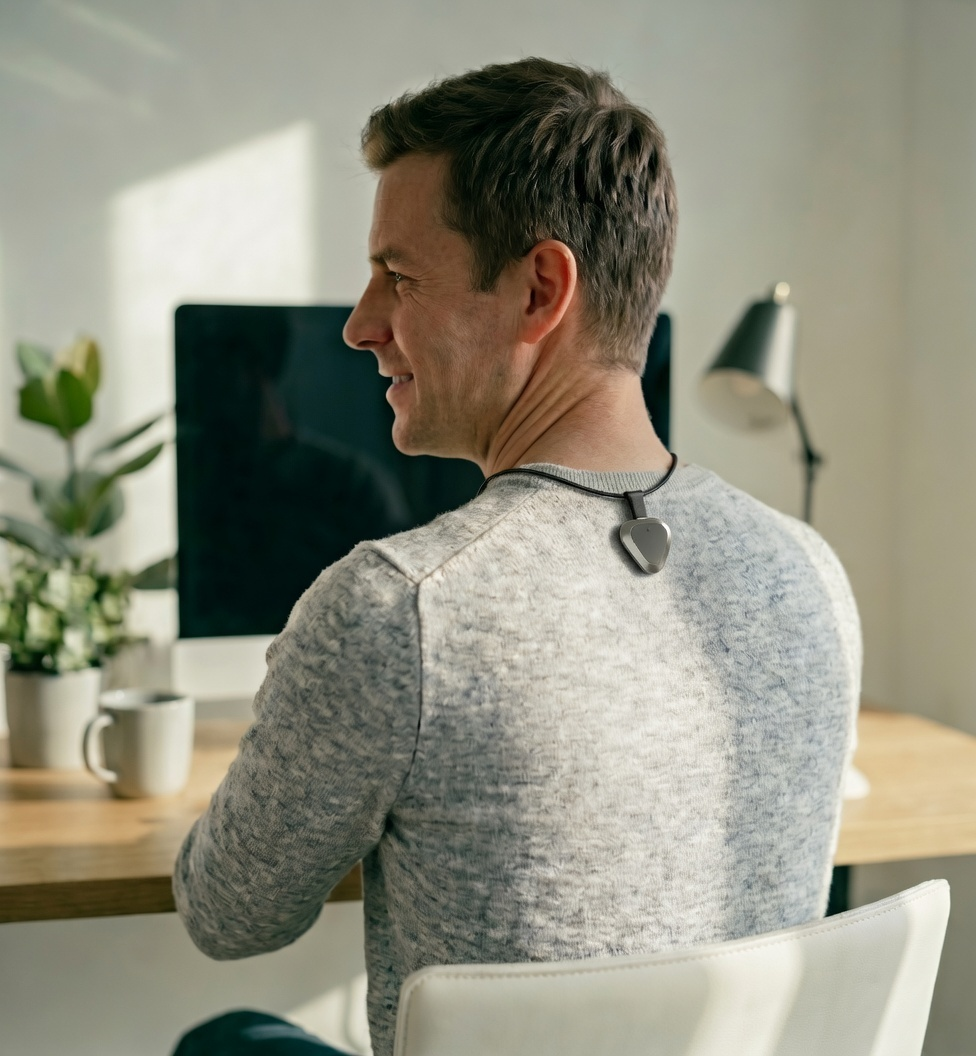
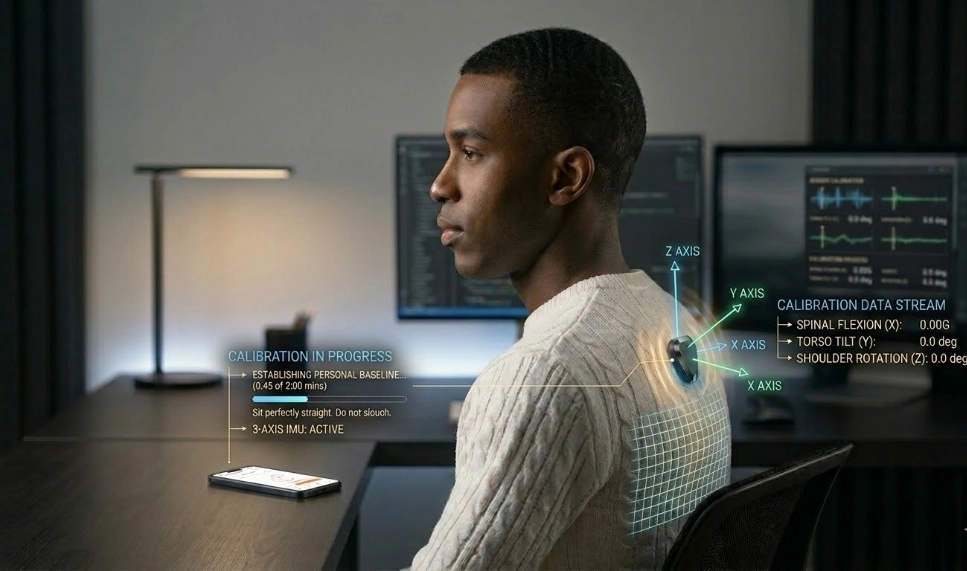
Kodgem Straight is a clip-on wearable that packs a serious punch under the hood. It uses a full IMU sensor array—meaning it combines an accelerometer, gyroscope, and magnetometer—with machine learning to track your movement in real time.
What really sets it apart from "basic" sensors is that it doesn't just buzz at a fixed angle. It's designed to be smart enough to adapt its sensitivity as your posture actually gets better. This "progressive training" is key because it means the device evolves with you, rather than becoming something you just learn to ignore after a few weeks.
What we like:
- Full sensor fusion (3-axis IMU) for clinical-grade posture detection
- Progressive ML training that raises the bar as you improve
- Adaptive vibration that combats alert fatigue
- Comprehensive app with posture scores, trends, and wear-time tracking
- No adhesive required — clips directly to clothing
- ~10-day battery life under normal use
What could be better:
- Higher price point than competitors
- Newer brand with a smaller review base than established players
For a deeper dive into the sensor technology and the machine learning that powers this, check out our full article on how AI posture correction works.
2. Upright GO 2 — Best Established Smart Posture Device
Price: \$79-\$109 | Best for: Users who want a proven, discreet posture sensor with a large user community
The Upright GO 2 is the most recognized name in the smart posture corrector space, with 15,000+ reviews and adoption by 500+ clinics worldwide. It weighs just 10 grams, attaches to your upper back via medical-grade adhesive (or an optional necklace), and sends vibration reminders when you slouch past your calibrated threshold.
Specs: 48 x 28 x 8.6mm | 10g | Bluetooth LE 4.2 | Up to 35-hour battery | 9 feedback plans | 4 activity modes | USB-C
What we like:
- Extremely lightweight and discreet
- Strong app with 30-day data sync and 9 customizable plans
- Dual wear options (adhesive or necklace)
- Large, established user community
- 30-day money-back guarantee
What could be better:
- Adhesive does not stick well on oily skin — a consistent user complaint
- Battery degrades over time; some users report drops from 25+ hours to 6 hours after months of use
- Only splash-proof, not waterproof
- Basic calibration (no progressive ML training)
- Requires a smartphone for full functionality
Sources: Upright Official, TechRadar Review, Digitogy 2026 Review. For a detailed head-to-head, see our Kodgem Straight vs Upright GO 2 comparison.
3. FUTO — Best Budget Smart Posture Sensor
Price: ~\$99 | Best for: Users who want basic smart posture tracking at a mid-range price
FUTO is a clip-on smart posture sensor that offers IMU-based slouch detection and vibration feedback. It represents a solid middle ground between budget braces and premium AI trainers. The device clips to your clothing (no adhesive needed) and connects to a companion app for basic posture tracking.
What we like:
- No adhesive required — clips to collar or clothing
- IMU sensor for accurate tilt detection
- Reasonable price point
- Companion app for tracking
What could be better:
- Basic calibration without progressive adaptation
- Smaller user community and fewer reviews
- Limited activity modes compared to Upright GO 2
- App features are less comprehensive
4. Neofit — Best Smart Posture Clothing
Price: ~\$120 | Best for: Users who prefer wearing a smart garment rather than attaching a separate device
Neofit takes a different approach by embedding posture sensors directly into a wearable shirt. The garment tracks your upper body alignment and connects to an app that provides feedback and progress data. It is an interesting concept for people who dislike clip-on devices or adhesives.
What we like:
- No separate device to remember or charge
- Covers more surface area for broader posture analysis
- Comfortable for all-day wear
What could be better:
- Must be washed carefully to preserve electronics
- Limited sizing options
- Sensor accuracy can vary depending on garment fit
- Cannot be worn with all outfits
5. BackEmbrace — Best Physical Posture Corrector
Price: \$70-\$99 | Best for: Users who want immediate physical posture support without technology
BackEmbrace is a well-designed physical posture corrector that uses adjustable straps to pull your shoulders back into alignment. Unlike cheap elastic braces, it is made with premium materials and a flattering design that can be worn over clothing. However, it is still a passive device — it forces alignment rather than training your muscles to maintain it.
What we like:
- Immediate posture correction from day one
- Attractive design compared to medical-looking braces
- No battery, app, or technology to manage
- Good for posture awareness and comfort
What could be better:
- Passive support can weaken postural muscles with extended use (read why)
- No data tracking or progress measurement
- Visible under most clothing
- Does not retrain muscle memory
6. Traditional Elastic Brace — Budget Option
Price: \$20-\$55 | Best for: Users on a tight budget who need basic shoulder alignment support
The generic elastic posture brace is the most affordable option on the market. These braces physically pull your shoulders back using elastic straps. They are widely available on Amazon and come in dozens of variations from various brands.
What we like:
- Very affordable entry point
- No technology to set up or learn
- Immediate physical effect
What could be better:
- Can weaken muscles with long-term use
- Often uncomfortable after 1-2 hours
- Visible under clothing
- No customization, data, or progress tracking
- Most users stop wearing them within 2-3 weeks
Which Posture Corrector Is Right for You?
Here is a quick decision framework:
- You want long-term posture retraining with AI: Choose Kodgem Straight. The progressive ML training and full IMU sensor array make it the most advanced option for building lasting posture habits.
- You want a proven smart device at a lower price: Choose Upright GO 2. It has the largest user base and a solid app, though it lacks progressive adaptation.
- You prefer wearing smart clothing: Choose Neofit. The embedded-sensor approach eliminates the need for a separate device, though laundry becomes a consideration.
- You need immediate physical support: Choose BackEmbrace for premium quality or a traditional brace for budget-friendly relief. Just understand these are short-term aids, not long-term solutions.
- You are not sure what you need: Start with our free posture cost calculator to understand the real financial impact of poor posture, then take our posture assessment quiz for personalized recommendations.
The Verdict
The smart posture corrector market has matured significantly. Today's best devices go far beyond simple vibration alerts — they use sensor fusion, machine learning, and neuroscience-backed biofeedback to create lasting change. The key differentiator between a device that collects dust after two weeks and one that actually transforms your posture is progressive adaptation — the ability to grow with you rather than becoming background noise.
Whatever device you choose, the most important thing is to start. With 80% of people experiencing back issues at some point and the average office worker sitting 9+ hours daily, the cost of doing nothing is far higher than any device on this list. For a comprehensive overview of posture correction methods — from exercises to ergonomics to technology — visit our complete guide to posture correction.
Sources
- Dataintelo (2025). Posture Correction Market Report. Link
- Strategic Market Research (2025). Posture Correction Market 2030. Link
- Future Market Report (2025). Posture Corrector Devices Market 2025-2032. Link
- Market Reports World (2026). Posture Correctors Market to 2035. Link
- Upright Pose Official Store. Link
- Upright GO 2 Specifications. Link
- TechRadar. Upright GO 2 Review. Link
- Alibaba Expert Buying Guide (2026). Best Smart Posture Corrector. Link
This content is for informational purposes only and does not constitute medical advice. If you have specific health concerns, please consult a qualified healthcare professional.

Leave a comment
This site is protected by hCaptcha and the hCaptcha Privacy Policy and Terms of Service apply.