
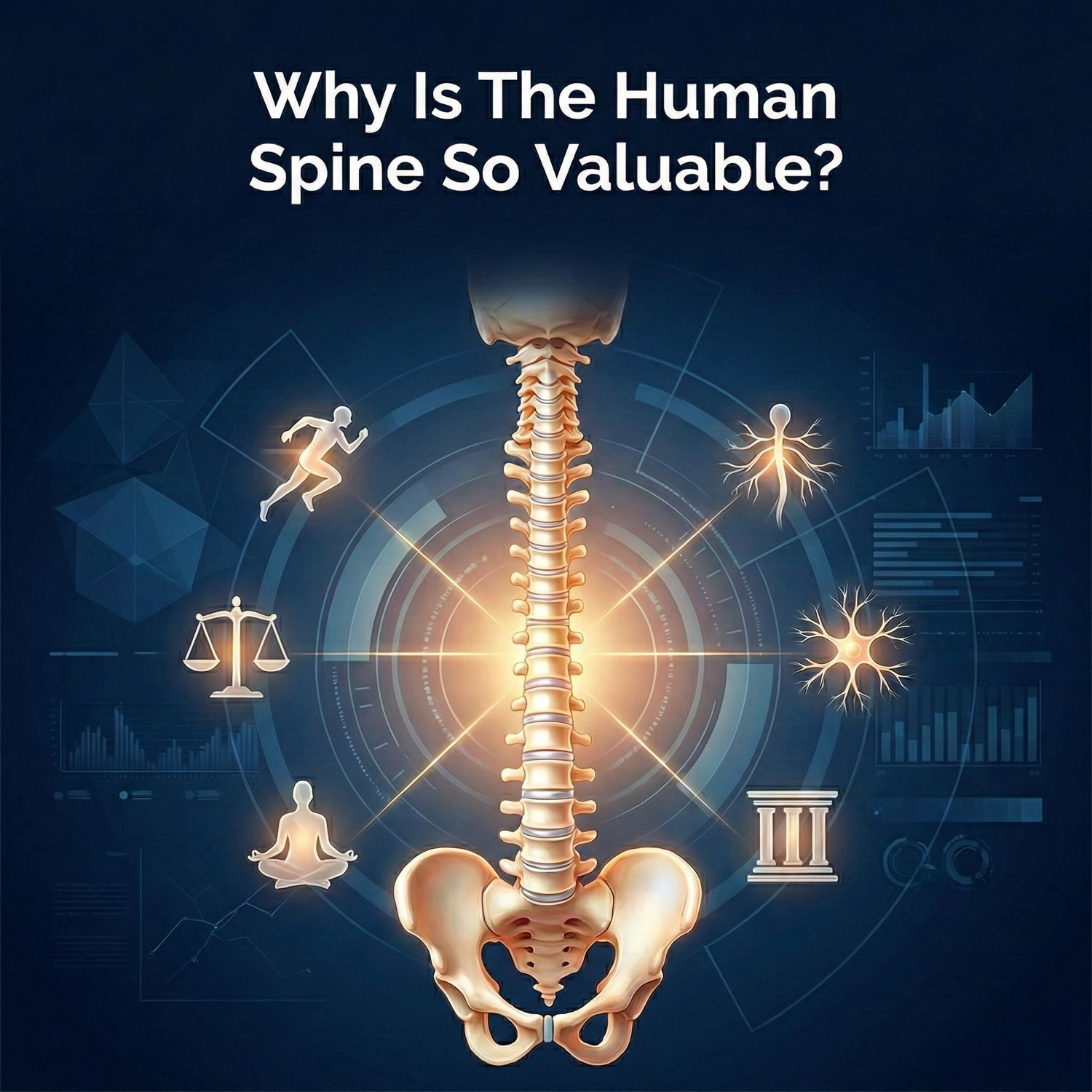
The structure that keeps the human body upright, enables movement, and establishes a vital communication line between the brain and the entire body: the spine.
Often unnoticed until pain appears, the spine is actually one of the most critical centers of the human body.
How Did the Human Spine Form?
The human spine took its current form through the evolutionary transition to an upright posture. Unlike four-legged animals, the human spine:
- Developed an S-shaped curvature
- Learned to distribute body weight more evenly
- Took on both movement and protection functions
The spine consists of 33 vertebrae, divided into the following regions: Cervical (neck), Thoracic (upper back), Lumbar (lower back), Sacrum, Coccyx

“The spine is both the structural and neurological center of the human body.”
Why Is the Spine So Valuable?
The value of the spine goes far beyond being a column of bones. It performs multiple vital functions simultaneously.
1. Enables Brain–Body Communication
Inside the spine lies the spinal cord, which transmits all commands from the brain to muscles and organs.
“Damage to the spinal cord can affect the entire body.”
Serious spinal injury can result in:
- Paralysis
- Sensory loss
- Movement disorders
2. The Center of the Movement System
Walking, bending, turning, jumping—all movement is made possible by the spine and surrounding muscles.
3. Acts as a Protective Shield
The spine protects:
- The spinal cord
- Nerve roots from external trauma
For this reason, spinal surgeries are among the most complex and high-risk procedures in medicine.
“Spinal surgery requires extreme precision and advanced technology.”

Why Does the Whole Body Get Affected When the Spine Is Compromised?
Because the spine:
- Is the main pathway of the nervous system
- Acts as the transmission pipeline for signals from the brain
- Is the center of reflexes and muscle control
A disturbance or pressure in the spine may present as:
- Lower back pain
- Neck stiffness
- Shortness of breath
- Postural disorders
Why Do We Neglect Our Spine in Modern Life?
- Prolonged sitting
- Excessive phone and computer use
- Slouched posture
- Sedentary lifestyle
All of these gradually disrupt the spine’s natural balance.
“Poor posture silently deteriorates spinal health.”
This Is Where Kodgem Straight Comes In

Kodgem Straight is not a medical device. However, it is an AI-powered posture device and an intelligent posture support and awareness system designed to help protect spinal health.
It plays a supportive role in managing:
- Slouched posture
- Postural disorders
- Posture-related muscle imbalances
What Is Kodgem Straight?
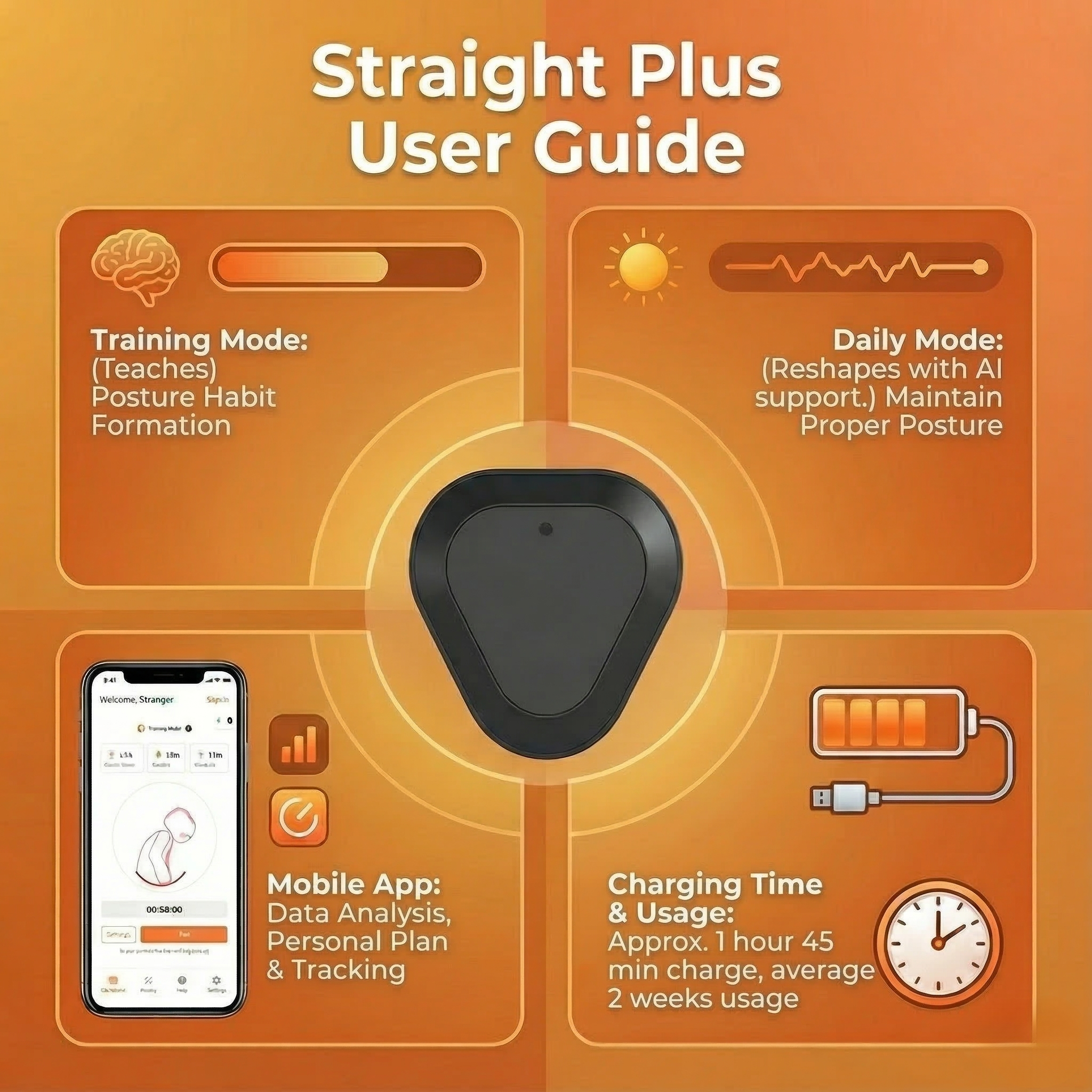
Kodgem Straight is an AI-powered, sensor-supported, data-driven posture monitoring system developed for individuals experiencing posture problems.
When worn on the back, it:
- Analyzes spinal and shoulder alignment using AI-supported sensors
- Detects slouched posture and postural deviations
- Provides instant BioFeedback vibration alerts during poor posture
- Tracks posture data via a mobile app with graphs and statistics
- Records daily posture habits
What Does This System Offer the User?
With Kodgem Straight, users can:
- Become aware of posture mistakes made unconsciously throughout the day
- Recognize posture habits that may harm the spine long-term
- Learn correct posture through their own muscle activation, without force
- Develop a sustainable posture habit over time
The primary goal of Kodgem Straight is not to forcibly keep the body upright, but to support the user in developing posture awareness through their own bodily feedback. This approach aligns with modern physiotherapy and posture education principles.
“Postural awareness plays a key role in protecting spinal health.”
Conclusion: The Spine Is Not a Luxury — It Is Life Itself
Our spine:
- Keeps us upright
- Enables movement
- Connects the brain to the body
- Carries a lifetime of load
That is why taking care of it is not an option—it is a necessity.
Gaining posture awareness and protecting spinal health are among the most valuable steps in this lifelong journey.
References
Kenhub – Vertebral Column Anatomy & Function
Cleveland Clinic – Spine (Spinal Anatomy & Function)
PubMed – The Science of Posture: How the Spine Shapes Health & Mobility
Scoliosis & Spinal Disorders – Czaprowski et al. (2018)
National Scoliosis Foundation – Spine Anatomy Guide
For a complete overview of posture correction methods, visit our comprehensive posture correction guide.
Related Reading
Free Posture Tools
This content is for informational purposes only and does not constitute medical advice. If you have specific health concerns, please consult a qualified healthcare professional.


Leave a comment
This site is protected by hCaptcha and the hCaptcha Privacy Policy and Terms of Service apply.